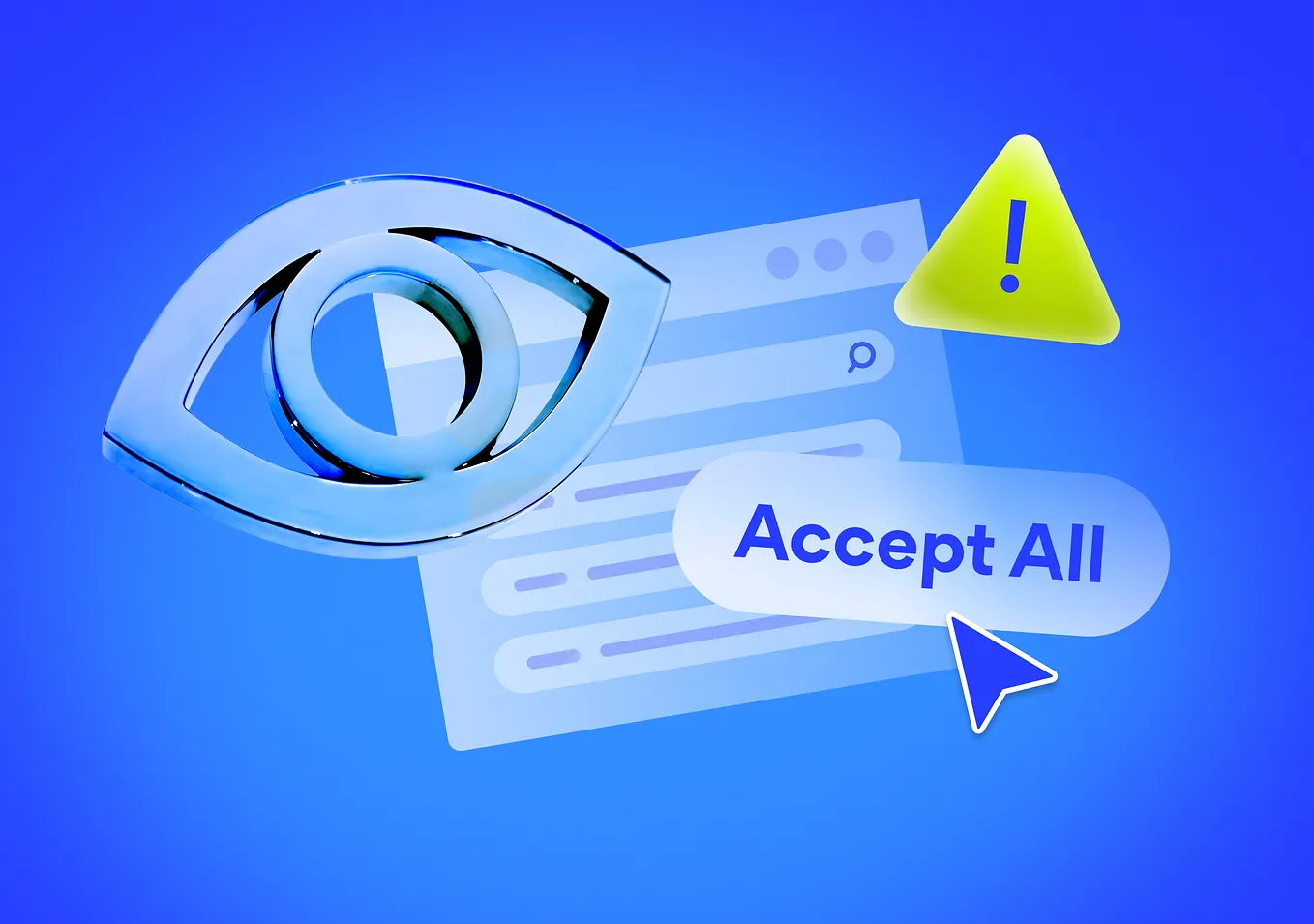
You’ve seen them. The pop-up that guilt-trips you into subscribing (“No thanks, I prefer paying full price”). The “Only 2 left!” counter that’s been sitting at 2 for three weeks. The cookie banner where “Accept All” is a bright, friendly button – and “Reject” requires a PhD in navigation.
These are dark patterns: design techniques built not to help users, but to manipulate them. And for years, they’ve been a quiet fixture of digital life.
That’s changing. The EU has moved from guidance to enforcement, and the UK isn’t far behind. Whether you run an e-commerce store, a SaaS product, or a content site, understanding what counts as a dark pattern – and what the law now says about them – matters more than ever.
This post covers everything you need to know: what dark patterns are, how they work, which ones are now banned, and what it means for your business.
What Are Dark Patterns? The Meaning Explained
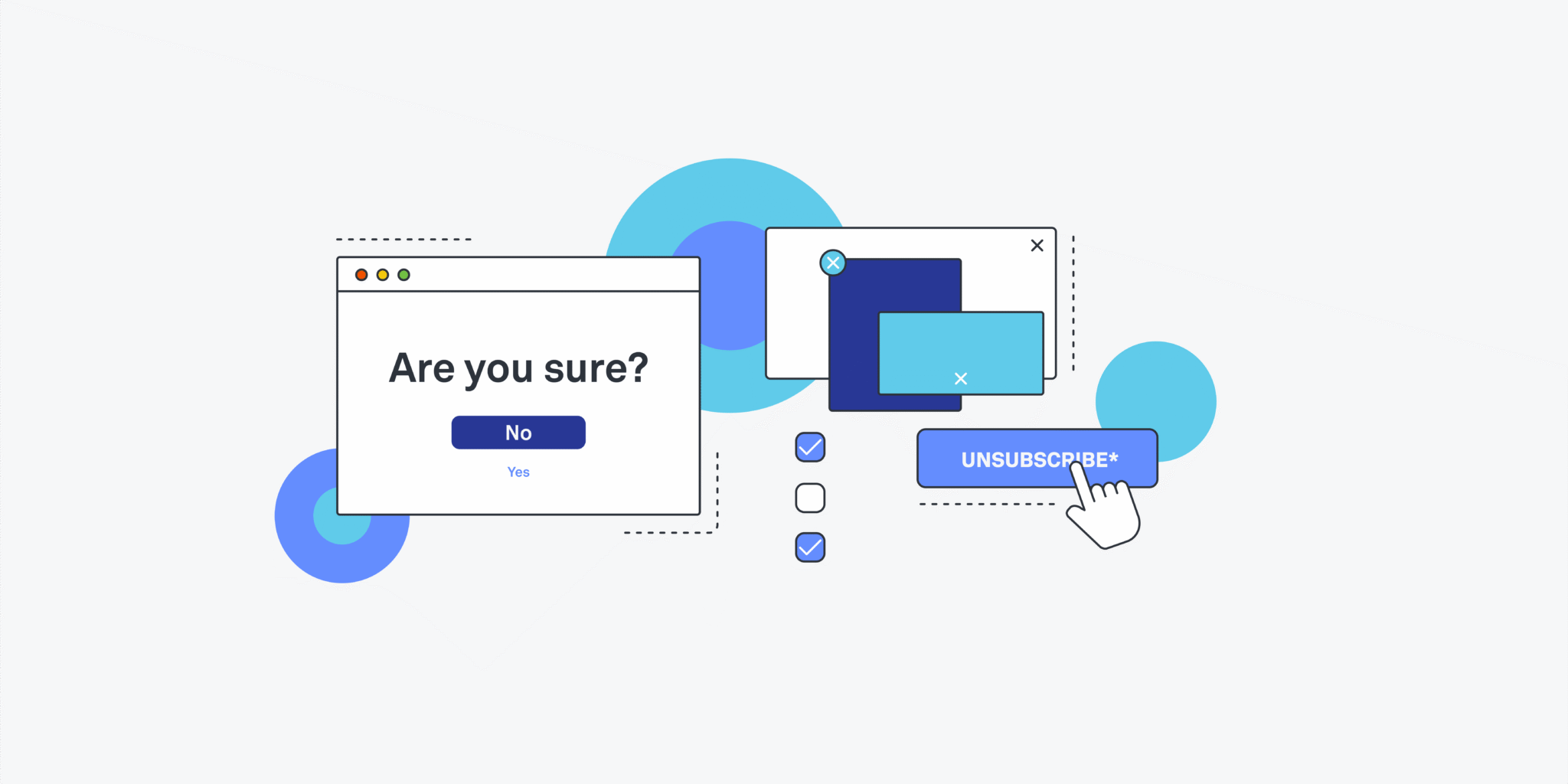
Dark patterns (increasingly called “deceptive patterns” by regulators) are deliberate design choices that steer users into actions they didn’t intend or wouldn’t choose if given a fair option.
The term was coined by UX designer Harry Brignull in 2010, who began cataloguing the techniques brands were quietly using to boost sign-ups, suppress cancellations, and extract data. What was once a niche UX concern is now a mainstream regulatory issue.
Dark patterns aren’t bugs or accidents. They’re intentional design decisions that prioritise business outcomes over user wellbeing – and that’s exactly why regulators are treating them as an unfair trading practice.
The key distinction is intent. A confusing checkout flow might be poor design. A checkout flow deliberately engineered to obscure a pre-ticked insurance add-on? That’s a dark pattern.
Dark Patterns UX: How Manipulative Design Influences Behaviour
Dark patterns UX works by exploiting the same cognitive shortcuts that good design uses to help people – just in reverse. Where ethical design reduces friction for the user, dark patterns create friction strategically: making the “wrong” choice (for the business) harder, slower, or more confusing than it needs to be.
Three core mechanics underpin most dark patterns:
- Friction asymmetry. Signing up is one click. Cancelling requires a phone call. The imbalance isn’t accidental.
- Visual manipulation. Colour, size, and placement are used to draw attention to preferred options and suppress others.
- Emotional pressure. Language designed to create guilt, urgency, or fear nudges users away from choices the business doesn’t want them to make.
Together, these tactics steer behaviour without technically lying – which is exactly what made them so difficult to regulate for so long.
Dark Patterns Examples: The Most Common Tactics
Here are the dark pattern examples regulators and consumer groups are watching most closely – and the ones your business should audit for.
1. Confirmshaming
What it is: Framing the decline option to make users feel guilty or embarrassed for saying no.
Example: “No thanks, I don’t want to save money.”
Why it’s a problem: It uses emotional manipulation rather than genuine persuasion. Regulators consider this a form of psychological pressure on consumers.
2. Subscription Traps
What it is: Making it significantly harder to cancel a service than to sign up for it.
Example: Signing up online in 30 seconds; cancelling requires calling a number only available during business hours.
Why it’s a problem: Directly targeted by EU and UK law. The DMCCA specifically addresses subscription renewal transparency and cancellation ease.
3. Sneak Into Basket
What it is: Adding a product, insurance, or donation to a user’s basket without them actively choosing it.
Example: A pre-ticked travel insurance add-on at flight checkout.
Why it’s a problem: Pre-selected add-ons are explicitly banned under EU consumer law and targeted by the UK’s CMA guidance.
4. Fake Urgency & False Scarcity
What it is: Countdown timers, “Only X left!” messages, or “Limited offer” banners that aren’t accurate.
Example: A hotel booking site showing “3 people viewing this room” when the figure is fabricated or wildly exaggerated.
Why it’s a problem: Misleading urgency claims constitute false advertising under both the DSA and UK Consumer Protection from Unfair Trading Regulations.
5. Cookie Banner Manipulation
What it is: Designing cookie consent banners so that “Accept All” is visually dominant and “Reject” or “Manage” is obscured, greyed out, or requires multiple additional steps.
Example: A large, colourful “Accept All” button alongside a small, grey “More options” link that leads to a separate page with individual toggles to switch off.
Why it’s a problem: One of the most frequently cited dark patterns under GDPR. Regulators have issued fines across Europe specifically for manipulative cookie banners.
6. Hidden Fees
What it is: Advertising one price and revealing additional charges only at the final stage of checkout.
Example: Booking tickets for £20 each, with a £4.50 “booking fee” and £1.75 “delivery fee” appearing only on the final payment screen.
Why it’s a problem: Hidden fees are a direct breach of price transparency obligations under both EU and UK consumer law.
7. Roach Motel
What it is: Easy to get in; nearly impossible to get out. Applies to accounts, mailing lists, loyalty schemes, or any service where leaving is disproportionately difficult.
Example: A newsletter that requires you to log into an account, navigate to preferences, and confirm via email – to stop a mailing list you never knowingly joined.
Why it’s a problem: Regulators view disproportionate exit barriers as an unfair restriction on consumer rights.
Dark pattern vs. ethical alternative – quick reference
| Dark pattern | Ethical alternative |
| “No thanks, I hate saving money” | “No thanks” or simply close the pop-up |
| Pre-ticked newsletter opt-in at checkout | Unticked opt-in with clear label |
| “Only 2 left!” (when there are hundreds) | Genuine stock or urgency messaging – or none |
| “Accept All” in bright colour; “Reject” hidden | Equal prominence for accept and reject options |
| Cancel button buried behind 5 screens | Clear, single-step cancellation |
| Hidden fee revealed only at final checkout step | All costs shown before checkout begins |
Why the EU Is Cracking Down on Dark Patterns
The EU’s regulatory focus on dark patterns has been building for several years, driven by a growing body of evidence that deceptive design causes measurable harm to consumers – financially, in terms of data privacy, and in how people are able to exercise their rights online.
The key legislation to know:
Digital Services Act (DSA)
Came into force for large platforms in August 2023, extended to smaller platforms in February 2024. The DSA explicitly prohibits dark patterns that manipulate user choices, particularly around consent, data collection, and service cancellation. Violations can result in fines of up to 6% of global turnover.
GDPR & ePrivacy
GDPR’s requirement for “freely given, specific, informed, and unambiguous” consent means that any design making it harder to say no than yes – including manipulative cookie banners – is a compliance issue, not just a UX one. Enforcement has accelerated significantly since 2022, with regulators in France, Ireland, Italy, and Germany all issuing fines.
EU Unfair Commercial Practices Directive
Applies to misleading actions and omissions – which covers false urgency claims, hidden fees, and deceptive framing. Updated guidance issued in 2022 specifically named dark patterns as a form of unfair commercial practice.
In practical terms, the EU has moved from “we’re watching” to “we’re fining”. The question for businesses is no longer whether these laws apply, but whether their current design practices can withstand scrutiny.
Website Laws UK Businesses Need to Know
The UK operates its own regulatory framework post-Brexit, but the direction of travel mirrors the EU closely. UK businesses shouldn’t assume that distance from Brussels means distance from enforcement.
Digital Markets, Competition and Consumers Act (DMCCA) 2024
The most significant recent development for UK businesses. The DMCCA gives the Competition and Markets Authority (CMA) stronger powers to act against subscription traps, fake reviews, and drip pricing – and introduces civil fines for non-compliance. Subscription transparency rules are a key focus.
Competition and Markets Authority (CMA) Guidance
The CMA has been active in issuing guidance on online choice architecture – essentially, how design can manipulate consumer decisions. Their 2022 report specifically identified dark patterns as a consumer harm and signalled increased enforcement activity.
Consumer Protection from Unfair Trading Regulations
Long-standing UK regulation that prohibits misleading actions and omissions. False urgency, hidden fees, and deceptive framing all fall within scope. This legislation gives trading standards authorities and the CMA grounds to act.
PECR and ICO Cookie Consent Rules
The Privacy and Electronic Communications Regulations (PECR), enforced by the ICO, govern cookie consent in the UK. The ICO has been explicit: consent banners must give users a genuine choice. Manipulative banner design – asymmetric buttons, hidden reject options – does not meet this standard.
If your website uses pre-ticked boxes, buries the “reject” option in cookie banners, adds unexpected charges at checkout, or makes cancellation deliberately difficult, you’re exposed to regulatory risk in both the UK and EU.
Is Your Website Using Dark Patterns? A Quick Audit
Run through these questions honestly. If the answer to any of them is “no” or “not sure,” it’s worth a closer look.
- Are prices, fees, and charges shown clearly before the final checkout step?
- Is it as easy to cancel a subscription or account as it is to sign up?
- Are opt-in boxes for marketing or data sharing unticked by default?
- Do your cookie consent options give equal prominence to accept and reject?
- Is your urgency messaging – countdowns, stock levels, viewer counts – accurate and verifiable?
- Can users tell clearly what they’re agreeing to before they click?
- Is the language used to decline options neutral, rather than designed to create guilt?
If you’re unsure about any of the above, a UX or compliance review is a sensible next step – and one that’s considerably cheaper than a regulatory investigation.
Dark Patterns and SEO: The Hidden Cost
Beyond the legal risk, dark patterns create a measurable SEO problem – and it’s one that compounds over time.
Google’s ranking systems increasingly reward pages that provide a genuinely good user experience. High bounce rates, short session times, and low return visit rates – all common on sites that use manipulative design – send negative signals. Conversely, sites that users trust tend to generate more return visits, more dwell time, and more organic engagement.
There’s also a growing connection between trust signals and AI search visibility. Platforms like ChatGPT and Google AI Overviews are more likely to cite content from brands with strong credibility signals – and a reputation for deceptive practices works directly against that. As generative search grows, the value of being seen as a trusted, ethical brand becomes even more tangible.
If you’re thinking about how your site performs in both traditional and AI-powered search, our GEO and SEO services are worth a look – building the kind of content authority and trust that AI platforms reward is exactly what we do.
Ready to Build a Website People Actually Trust?
Ethical design isn’t just the right thing to do – it’s increasingly the smart commercial choice. Clearer UX, honest messaging, and transparent pricing attract better customers, reduce complaint rates, and protect your business from regulatory risk.
At Fenti, we help businesses build digital experiences that earn trust rather than engineer around it. Whether you need a UX audit, a content strategy built for AI search, or a full website overhaul, we’d love to help.