From June 2025, the European Accessibility Act (EAA) will become law, and it is set to reshape many of the assumptions we’ve held about how we build, present, and manage digital content and services. For a forward-thinking marketing agency like Fenti, it is not just compliance or risk mitigation that makes the EAA significant – it offers opportunity, differentiation and a chance to lead rather than follow.
Quick Links
When did the EU Accessibility Act 2025 come into effect and what is the impact?
The EAA was approved back in 2019, but its actual enforcement date was 28th June 2025, from which point a wide range of products and services must meet defined accessibility requirements. These include not only the more obvious areas like websites and mobile apps, but also consumer electronics – smartphones, TVs, computers, game consoles, as well as public information points such as ticketing and vending machines.
What obligations do businesses have under the EU Accessibility Act?
What counts as ‘accessible’ under the act is defined by both legal obligations and technical standards. Organisations across the EU will have to ensure that persons with disabilities have access to the same experience and information as others. Failure to satisfy the requirements could lead to penalties, which for public sector bodies, may include significant fines.
What this means is multi-fold. First, there’s the matter of responsibility and ethics. For example, Fenti are in the business of communicating – marketing ideas, concepts, branding and services that are visible and persuasive. And here at Fenti, we’re a proudly inclusive bunch! To deny or ignore access for people with disabilities would not just be legally risky, it would be a failure of inclusivity. We aim is to reach every potential audience, without creating barriers, so we view the EAA not simply as a baseline expectation, but as a bonus. Allow us to explain…
How can you incorporate the EU Accessibility Act into work processes?
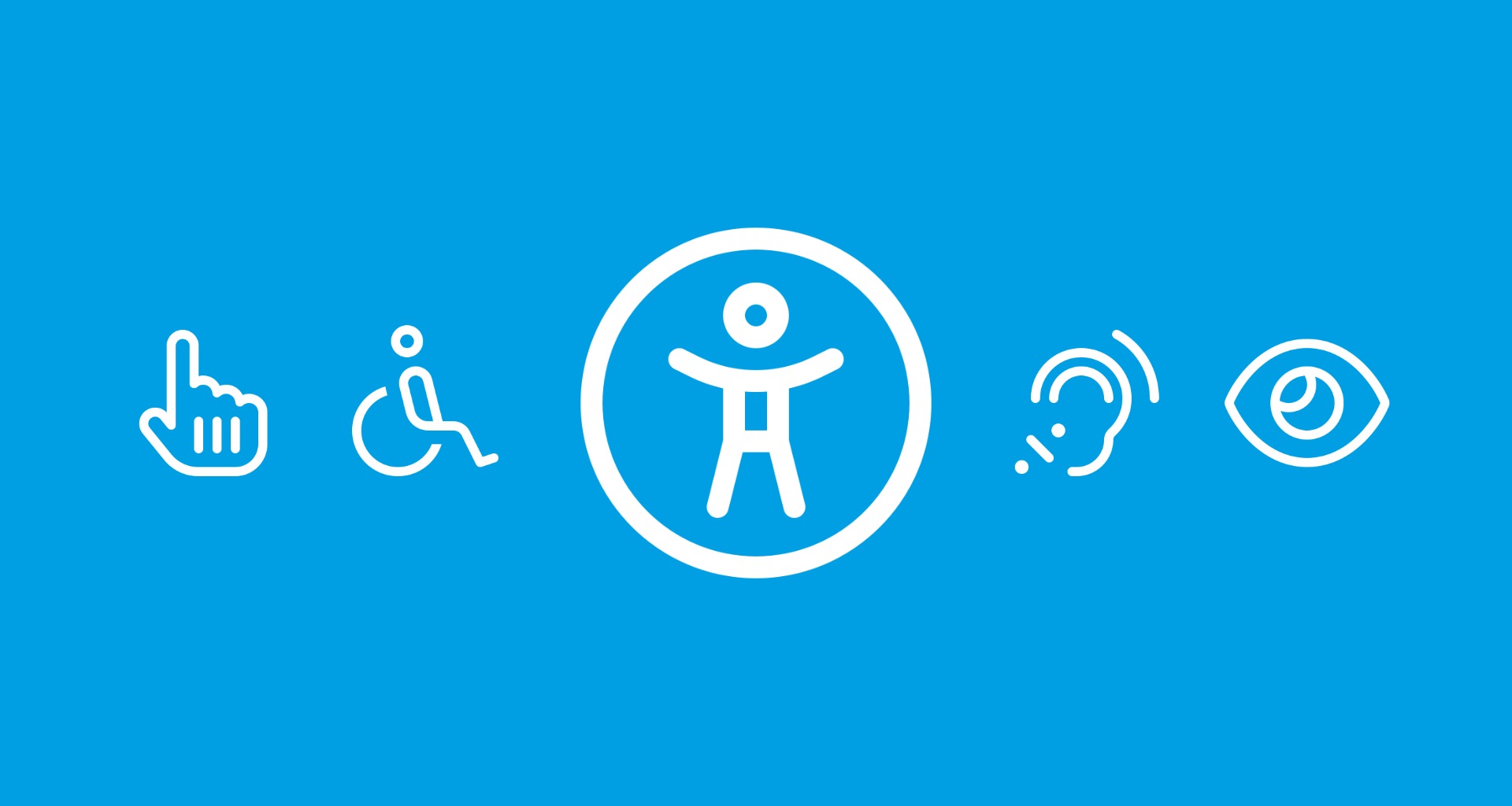
Second, there’s a practical side of the EAA that businesses need to consider. For example, at Fenti, we work to ensure our clients meet the new standards and they rely on us to understand the intricacies. Whether we’re designing new responsive websites, optimising new apps (more on this soon!), creating content for campaigns, or advising on UX and user journeys, we factor in accessibility from the very start. What that means in ‘real terms’ is ensuring compatibility with assistive technologies, keyboard navigation, using clear and logical structures (especially in web design), perceivable content (text alternatives for images, good contrast, etc.), and generally ensuring nothing that we do creates unnecessary friction for users with disabilities. As the guidelines produced by AccessibleEU make clear, there are existing standards and technical support materials to help organisations understand exactly what is required.
What are the risks of ignoring the EAA?
Third, there’s risk management. Not complying is no longer a theoretical issue. Organisations – especially public bodies – face potential fines. But even for private companies or brands, the reputational risk is real. Users today are more aware of accessibility, more vocal on social media, and more savvy about which organisations do things properly. If a client’s platform or campaign is judged inaccessible, it could lead to negative visibility. We work to avoid that, both for ourselves and the clients we serve.
Are there positives to EU Accessibility Act?
Look beyond compliance and risk and you will see that there is opportunity. By becoming accessibility experts early in the journey, Fenti offer a competitive edge. We appreciate our clients may need help navigating the new legal landscape – what the requirements are, how to audit current digital assets, how to retrofit or redesign to meet the standard – and how to monitor ongoing compliance. Our processes, tools and knowledge in this space means Fenti offer real added value. Accessibility can also improve overall usability for all users, not just those with disabilities. Better SEO, better mobile UX, higher performance and satisfaction – many positives, beyond just ‘compliance’. The way we see it, our time and resource investment pays off in ways beyond just avoiding penalties.
From a branding standpoint, being accessible aligns with values that many consumers increasingly care about; with inclusion, fairness and social responsibility being front-of-mind. For clients who want to show themselves as inclusive and forward-looking, working with a marketing agency that ‘gets’ the EAA is a must going forward. It may even be a differentiator when clients are considering partnering with an agency: who is best prepared, more aware, more responsible? Our team at Fenti take an active role bringing our respective areas of expertise to the table.
For some time, here at Fenti marketing we’ve been auditing our own digital assets, as well as those of our clients’ current websites, campaigns and content, evaluating against the EAA’s guidelines and relevant standards. We ensure that our creative and development teams undertake regular awareness training, and that accessibility is baked into briefs, design projects and content planning. Keeping abreast of the guidelines forms part of our assessment trigger points, utilising published accessibility documents to help our team (and partnering clients) understand the criteria and potential for added value that these newly implemented regulations afford.
With the EU Accessibility Act, compliance is king
When the EU Accessibility Act came into effect back in June ‘25, it was more than a regulatory tick-box. It was actually a watershed moment in the digital and service environment, and for all of us in marketing, particularly in agencies that pride themselves on innovation and audience reach. For Fenti we saw it as a chance to sharpen our skills, elevate our standards, and guide clients to a more inclusive future. Our advice? Adapt early – not just for avoidance of risk, but for a chance to hone, perfect and stand out! Are you and your business EU Accessibility Act compliant yet? Need a helping hand with it? We’re on your side and ready for a chat.